

This year, America will celebrate her 250th birthday — marking the anniversary of the signing of the Declaration of Independence on July 4th, 1776.
WSHU is leading up to the milestone with a new series called the Making of U.S., where we’ll explore some of the things that make America, America.
We’re looking into topics like federalism, the Constitution, and what “life, liberty and the pursuit of happiness” really means.
But we know you have questions, too. We want to hear from you! What questions do you have about what makes the U.S.? Let us know in the comment box below.
-
 For the final episode of WSHU’s The Making of U.S., we go back in time to the start of the American Revolution.
 -
 Have you ever signed an online petition, written to the mayor about a pothole or testified at a public hearing? If the answer is yes, you have exercised your First Amendment right to petition.
 -
 The Constitution tasks each state with redrawing its election district maps with information from the Census. It's top of mind right now — but it’s far from new.
 -
 250 years ago, candidates mostly relied on their own personal wealth to finance campaigns. That’s no longer the case.
 -
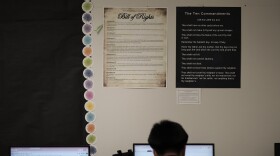 The Constitution prohibits state-sponsored religion and guarantees freedom of religion. But that doesn’t stop religion from influencing American politics — sometimes in ways that end up in front of the Supreme Court.
 -
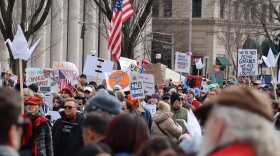 The right to peacefully assemble is part of the First Amendment of the Constitution. But recent protests across the country show that exercising that right can come with real risks and complications.
 -
 Why does the U.S. have only two major parties? A look at how the election system, voting rules and political incentives keep Democrats and Republicans in power.
 -
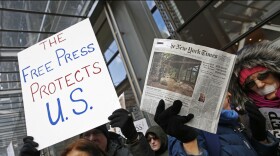 The U.S. Constitution states Congress can’t make a law that “abridges the freedom of the press.” For this week’s episode of The Making of U.S., Molly Ingram looks at what that means for reporters — and you.
 -
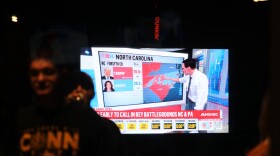 According to a 2024 Pew Research survey, more than 60% of Americans favor replacing the system with the popular vote to determine who wins the presidency. But it wouldn’t be a simple process.
 -
 The First Amendment of the United States Constitution declares Congress can’t pass a law abridging the freedom of speech. But that doesn't mean Americans can say whatever they want without consequences.


_
-
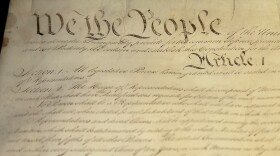 The U.S. Constitution is known as the Supreme Law of the Land and the foundation of American democracy. Gary Rose, a constitutional scholar at Sacred Heart University, explains why it's the glue that holds the country together.
 -
 The big day is July 4, 2026. It’ll mark a quarter millennium since the final text of the Declaration of Independence was approved by the Second Continental Congress. It severed political ties between the 13 colonies and Great Britain.
 -


