

Trini Badian, 23, brings years of personal experience to her work helping young people find stable, safe housing. She came to New Hampshire in 2019, at age 16 — alone, with no money and no place to live.
“I was like, ‘Oh, it'll all work out. I know people here. I’ll be fine,' ” Badian said. “It's not fine. I was homeless for years.”
Then, someone told Badian about Waypoint NH, an organization that helps connect people with services and support.
With Waypoint’s help, including months of housing and connecting with services, Badian now rents an apartment in Manchester with her sister and works at least two jobs, sometimes more.
NHPR sat down with Badian and 21-year-old Chris Payne-Walton, of Dover, who moved into Waypoint’s subsidized housing after years of couch surfing, to understand the challenges youth in New Hampshire face when they transition to adulthood without safe, stable housing. Badian and Payne-Walton had a message for peers who are on that journey: There’s help if you want it.
“Who knows if I'd even still be here honestly, because I was going through a rough, rough patch," Payne-Walton said. “They actually were life savers to a lot of people.”
Making ‘magic’ with housing and relationships
Waypoint is the state’s largest provider of services to young people experiencing homelessness. And its Manchester site is home base for teenagers and twentysomethings who need help finding safe, stable places to live.
The drop-in center provides people as young as 12 a place to connect with case managers and peers, join an art or life skills group, and get clothing and food. It feels like a college dorm in some ways — there are showers and a place to do laundry. But the closets also hold warm boots, canned goods, and camping gear for surviving outside.

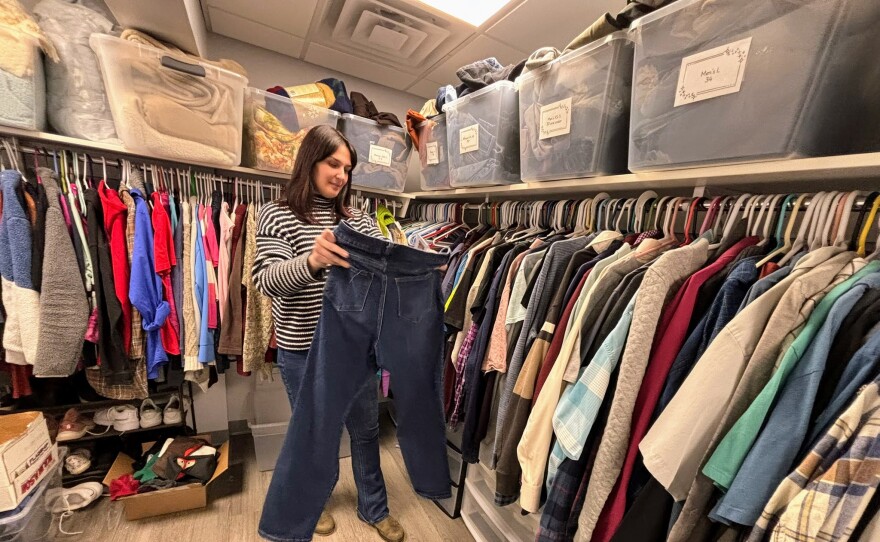

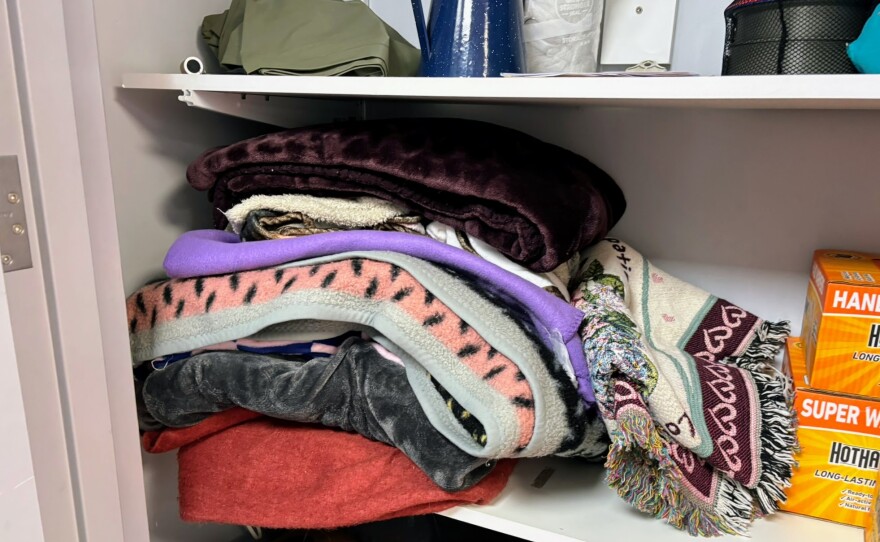


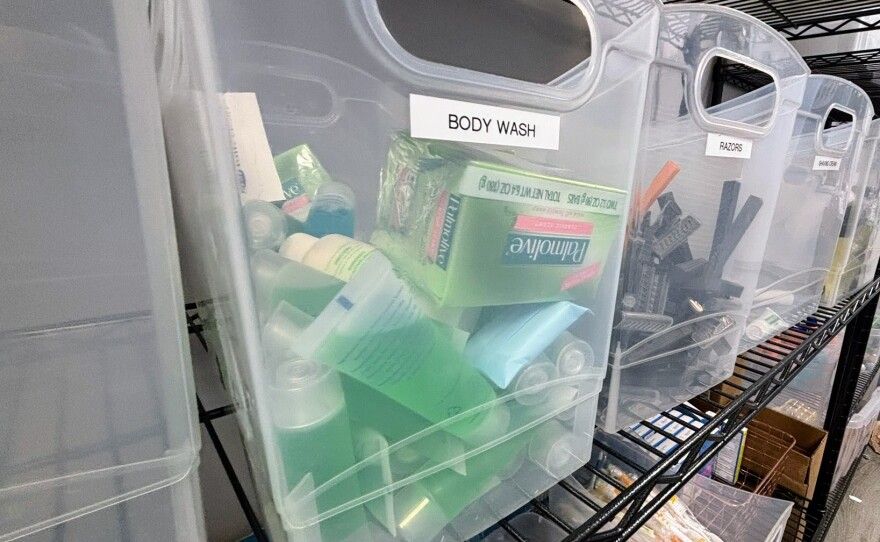
The 14-bed emergency overnight shelter downstairs is available to older youth, and they can keep their bed as long as they need it. It's full every night, and an average of 20 people are turned away nightly.
Mandy Lancaster, director of youth services at Waypoint, said the shelter and Waypoint’s other housing is critical, but not enough on its own to help a young person successfully transition to a place of stability.
“We're going to offer the housing but we're going to offer relationship and support and see what kind of magic we can make with that relationship,” she said.
It’s hard to know just how many young people in New Hampshire lack reliable and safe housing because there’s no single count. And youth homelessness is often invisible. Young people tend to avoid adult shelters, and to an outside observer, couch surfing might look like staying with a friend, not an alternative to sleeping outside.
According to the state Department of Education, more than 3,300 students in grades 1-12 were homeless at some point during the last school year. The New Hampshire Coalition to End Homelessness, which counts the number of people experiencing homelessness on a single night each year, found that in 2023, about 600 people under 25 didn’t have secure housing. The vast majority of them were under 18.
Waypoint alone houses nearly 90 youth per year in its subsidized apartments, and provides a range of services to more than 500 youth annually who don’t have stable housing. Lancaster said they are seeing more minors asking for help.

She has a message for people who have a hard time believing that youth and young adult homelessness exists in our communities: “Listen to folks like Chris and Trini and hear their stories and to believe them,” Lancaster said.
Waypoint’s overnight shelter is the only one of its kind in New Hampshire. Waypoint also has two youth drop-in centers in Rochester and Manchester. Social workers, case managers, and street outreach teams help vulnerable teenagers and young adults find services. Waypoint pays for its programs with grants and donations.
While the vast majority move onto stable, safe housing, Waypoint remembers the young people who died along the way at a vigil each year. In March, that included a 22-year-old man who left a young daughter behind, and a 20-year-old man who had found housing a month before he died.
‘Oh my God. Let us help you.’
Badian grew up without stable housing. She moved around with her mother 15 to 20 times: to New York City, Georgia, New Hampshire, and Pennsylvania. When she turned 16, she emancipated herself, and decided to return to New Hampshire.

“I came back here on a bus with no money and, like, a duffel bag and a hope and a dream that I could, because I knew this place as home,” Badian said.
Her “dream” didn’t go as planned. She was homeless for the next few years. She described how it felt to be truly homeless, and on her own.
“All I can think about is fear,” she said. “It's like a recurring, ‘Oh my God, what am I going to do? Where am I going to go? What am I going to eat?’ ”
Badian went into survival mode. She texted every phone number she had, searching for a place to stay, knowing some of those places were not safe.
“There’s a lot of things with drugs and sex that you have to do. There's times that I can't even count anymore where I've been taken advantage of,” Badian said. “And I just was like, 'well, this is what I have to endure because I don't have a place. This is somewhere I can sleep for today.' ”
Badian said she didn’t learn about Waypoint’s services until she was 19 — more than two years after trying to figure it out on her own. She used its transitional living program, which provides at least a year of housing, and help finding a job and connecting to additional services. Residents must use some of their income to save for a place of their own.
Waypoint said nearly 80 percent of youth in the program move on to stable housing.
“Once I got here, I'll say, it was like, ‘Oh my God. Let us help you.’ Like, you know, ‘Where have you been?’ And I'm like, ‘Where have you been?’ ” Badian said.
Today Badian is using her experience to mentor young people on the same journey. She’s passionate about the work because she sees herself in them — and she hopes they see their future in her.
“If I can be the person that's like, ‘Hey, it gets better, and I'm living proof, like, just know you're not going to be where you are forever,’ ” she said, “then that helps me. It heals me.”
‘Not everybody has a heart for you’
In the past year, 21-year-old Chris Payne-Walton of Dover has gone from couch surfing to renting his own apartment — a first for him. He said that was possible because like Badian, he was able to stay in one of Waypoint’s apartments.

Payne-Walton’s homelessness journey, as he calls it, began in high school, when he was living in Florida with his grandmother, Alethia.
“She taught me a lot of things. The way I behave now is because of her,” he said. His grandmother passed away around the same time as Payne-Walton’s high school graduation in 2023, leaving him grieving and nowhere to live. His parents weren’t around because they had moved to New Hampshire a year earlier for jobs at the Rochester Fair.
Payne-Walton’s first stop was at his other grandmother’s house. But that didn’t last long.
“She didn't really want me to stay there,” he said. “I stayed there for, like, three, four months, and then she kicked me out because I came home late.”
So Payne-Walton began couch surfing between friends’ homes and asking people for money — over and over. He remembers feeling ashamed for needing help and having to ask for it.
“I think that kind of like broke a lot of people's pockets, but also broke their trust with me a little bit, because they don't believe you all the time,” Payne-Walton said. “Like, ‘How are you still at a hotel?’ But it's just hard to keep explaining your story to every person you meet, every time you ask somebody for money.”
Out of options, Payne-Walton left Florida and moved into his family’s Rochester rental and found work, but it didn’t pay enough. So though he was housed, his housing didn’t feel stable.
“The person would come knocking on the door asking for the money. If you don't got the money, you'll get kicked out,” he said. “You know, not everybody has a heart for you. Especially when it's just a business. They don't care. A hotel is a hotel. You got the money or you don't. You get out. Just like that.”
Like Badian, Payne-Walton found Waypoint last year through word of mouth last, and has used several of its programs, including its drop-in center and youth navigators, who helped him connect with services. He moved into one of Waypoint’s duplexes in Dover with two roommates last summer.
With Waypoint’s help, Payne-Walton has secured a rent voucher to afford his own apartment. This is the most stability he's had since high school. For the first time in a long time, Payne-Walton can think about the future.

When asked what success looks like for him, Payne-Walton said it looked like being able to take care of himself, and becoming a paramedic. He’s saving money to pay for the training.
“The reason why I want to do it is because they saved my family a lot, like the firefighters,” Payne-Walton said. “And sometimes they didn't save people that I cared for. But I'm considering that on faith, they actually did care. And I want to help a lot of people too.”