EYDER PERALTA, HOST:
It's been a whirlwind decade for Tobias Jesso Jr. Songs written for Adele, Justin Bieber.
(SOUNDBITE OF SONG, "DAISIES")
JUSTIN BIEBER: (Singing) Way you got me all in my head.
(SOUNDBITE OF SONG, "RELATIONSHIPS")
HAIM: (Singing) This relationship - baby, how can I explain.
PERALTA: HAIM and Dua Lipa.
(SOUNDBITE OF SONG, "TRAINING SEASON")
DUA LIPA: I need someone to hold me close, deeper than I've ever known.
PERALTA: But for Jesso's fans, it's been a long wait for more of the singer-songwriter's own songs.
(SOUNDBITE OF SONG, "BLACK MAGIC")
TOBIAS JESSO JR: (Singing) I've been trying to look away. I can't avert it. Everyone shе touches turns to stone.
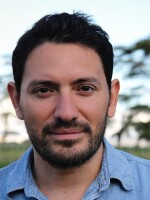
PERALTA: "Shine" is Tobias Jesso Jr.'s second album, and he joins us now.
JESSO: Hey.
(SOUNDBITE OF SONG, "BLACK MAGIC")
JESSO: (Singing) I'm hypnotized. I'm hypnotized.
PERALTA: You recorded the album live alone in your house, sitting at the piano. Why did you record it that way?
JESSO: It's kind of hard to - I guess it's not that hard to explain. I think with the first album, I was sort of thrust into this idea that I was, like, a piano man. I found myself over the years feeling like the record was sort of not something I would go back and listen to because it didn't feel like me. And so I kept on going back to my old demos. I was like, oh, man, like, this feels right. I could pull this off. This, I could listen to because it's true, you know? And so when I went to do this album, it was, like, so clearly about my life that I was like, Well, I want to be able to sing the way I sing it.
(SOUNDBITE OF SONG, "LULLABY")
JESSO: (Singing) And I saw your fragile heart, cursive scripts of other scars.
PERALTA: I want to ask about "Lullaby." It has a different quality than the other seven songs on the album. It almost feels like we're eavesdropping.
JESSO: Well, "Lullaby" is 'cause I forgot to turn the frigging mic on, honestly. Like...
PERALTA: (Laughter).
JESSO: No, I'm not kidding.
(SOUNDBITE OF SONG, "LULLABY")
JESSO: (Singing) You never lied.
And it was way out of my range. I was writing songs that I couldn't even sing, and I'm like, jeez, do I got to change the key? And then I'm like, wait, actually, the range of this is beyond keys on both sides. Like, what am I supposed to do? I sang that take and went, like, wow, I think that felt right. Then I turned around and looked at my computer 'cause I'm all alone in the basement. I'm like, bah. Like, I didn't turn on the mic.
PERALTA: (Laughter).
JESSO: It's just, like, flat line, you know? So the only mic that was picking up my vocal was the head mic, which was supposed to be for, like, the ambient room sound. And then when I listened back to it, I was kind of like, this is fine. This will work.
(SOUNDBITE OF SONG, "LULLABY")
JESSO: (Singing) All those dreams we never held. We'll swim like we can fly.
PERALTA: Well, then it also speaks to the vulnerability, right?
JESSO: Yeah, you know, like, and I sent it to Rosie (ph), I think, and she was just like, It's perfect.
PERALTA: Tell us who Rosie is.
JESSO: She's a poet who lives in Australia. You'll never find her. She does not want to be mentioned. She's just, like, a very authentic person. I asked her if she would take a look at some of my lyrics. For instance, like, "Everything May Soon Be Gone" was just, like, me writing in my notes app, one sprawling lyric.
(SOUNDBITE OF SONG, "EVERYTHING MAY SOON BE GONE")
JESSO: (Singing) Oh, I love you. You know it's true. Write it down anywhere you won't lose so you may hold that...
She did for me what I do for other people, I think, 'cause I would say, like, I don't know if this line is right. And she would say, well, why not? I said, well, I don't know, because it's it's not very clear. OK, well, what do you want to say? OK, what I want to say is, blah, blah, blah, this and this. So say that. No, I know, but it doesn't rhyme. So make it rhyme. That was, like, an editing process that I just wasn't used to doing for myself. I tend to sort of lean more on melody. But, like, when I was able to talk to Rosie and get deeper on things, it would bring in more of the, like, symbolism and a more poetic way of writing a song.
(SOUNDBITE OF SONG, "EVERYTHING MAY SOON BE GONE")
JESSO: (Singing) Oh, I need you. Yes, it's true. I wouldn't be anywhere without you.
PERALTA: You kind of retreated from the spotlight after "Goon," which is your first album, 10 years ago. You've spent time writing for other people. What makes a song yours? And, you know, what makes it for someone else?
JESSO: What makes a song mine is probably that no one else wants it.
PERALTA: (Laughter).
JESSO: No. But, like, when I go into a room, I'm not trying to write a song myself. I'm not even trying to have my story be a part of it. I'm sort of, like, getting together with an artist and trying to figure out what they want.
(SOUNDBITE OF SONG, "WHEN WE WERE YOUNG")
ADELE: (Singing) Everybody loves the things you do, from the way you talk to the way you move.
JESSO: Songs don't just come out of thin air because a bunch of people are in a room. Like, they're very hard-earned things. And it usually starts with getting to know what everybody's sort of North Star is. Let's listen to some music that, like, we wish we wrote. How about that? By the end of that, maybe you're stomping your feet, and the energy level in the room is picked up and people are kind of, like, turning into childlike versions of themselves, and then you know you're onto something.
(SOUNDBITE OF SONG, "WHEN WE WERE YOUNG")
ADELE: (Singing) 'Cause I've been by myself all night long hoping you're someone I used to know.
PERALTA: You've done that a lot. It sounds like you like it.
JESSO: I love it. I love it. But I'm still just as confused by it as I was in the beginning. You know, I always feel like I'm somebody who wishes I could, like, have the playbook. Many songs that I've written, I look back at the lyrics, and I just go, how did I do that? That's mystical to me.
(SOUNDBITE OF SONG, "WHEN WE WERE YOUNG")
ADELE: (Singing) That we might be exactly like we were before we realized...
JESSO: It's like realizing you might be a better version of yourself than even you gave yourself credit for for a moment.
PERALTA: You also credit a psychic with helping you on this album. How?
JESSO: I was going through a breakup and, you know, feeling pretty lousy, and a friend recommended this psychic. She started asking me all these questions about what I was doing in my life, and I told her I was writing songs again and that it might be an album. I wasn't quite sure. And I, sort of just asked her, do you think I'm done the album or not done the album? And she took a minute and then said, oh, you're not done the album. There's one more song. It's very dramatic. And how she said it was like, it's drama, drama, you know, like - and it was really funny that she was saying that because the album is so, like, sparse.
(SOUNDBITE OF SONG, "I LOVE YOU")
JESSO: (Singing) I hear her singing above the walls.
JESSO: The idea of, like, something very dramatic - I don't know. It agreed with me. And so I just wrote the song "I Love You." And I just knew that the ending was going to be this big thing. And, yeah, so she ended up predicting that song.
(SOUNDBITE OF SONG, "I LOVE YOU")
JESSO: (Singing) I love you. I love you.
PERALTA: And that drumbeat, I mean, it scared me, honestly.
JESSO: You know, the drums weren't there initially until I took a mega hit of mushrooms, and then all of a sudden, I had this drum idea. And the drum idea, even though it went against the complete idea of the album, which was this live piano album, it really, like, added to the song in a way that was surprising because the song's about this big, giant labyrinth of walls built to protect someone who's in the middle. And they want love, but they can't access it. And so the drums, to me, sounded, after they were made, like, all of those walls were just crumbling down. It became more powerful, like, when it had the meaning that I didn't even intend that at the beginning, when I came up with it.
(SOUNDBITE OF TOBIAS JESSO JR. SONG, "I LOVE YOU")
PERALTA: So, I mean, it sounds like you're in a really solid place. You are being yourself. You've been nominated for the songwriter of the year at the 2026 Grammys. You won in 2023. What do you want the next 10 years to look like?
JESSO: It seems like every ten years, my life changes in a big way without knowing why, but I'll probably try to find small ways to make myself happy and work with people who I really admire and am a fan of and maybe dip a toe in and, you know, play a little few songs here and there for people if there's any demand for it and - but try to keep it where I can always opt out if it doesn't feel right. And I think that's a huge privilege but one that I've spent a lot of time trying to get.
(SOUNDBITE OF SONG, "GREEN EYES")
JESSO: (Singing) The story of my life.
PERALTA: That's Tobias Jesso Jr. His new album "Shine" is out now. Thank you for being with us.
JESSO: Thanks for having me.
(SOUNDBITE OF SONG, "GREEN EYES")
JESSO: (Singing) But then you came around and everything began to change. Transcript provided by NPR, Copyright NPR.
NPR transcripts are created on a rush deadline by an NPR contractor. This text may not be in its final form and may be updated or revised in the future. Accuracy and availability may vary. The authoritative record of NPR’s programming is the audio record.